
How to License Your Sports Training Programs to Other Clubs
If your organization has spent years building a quality athlete development program, you already know how much work went into it. The expertise, the refinement, the trial and error across multiple seasons. That curriculum is not just something you run at your own facility. It is an asset.
Most sports organizations never think of it that way. They build programs for their own athletes, run them year after year, and consider that the end of the story. But there is another option, one that a growing number of national organizations, governing bodies, and established sports clubs are starting to use: program licensing.
Licensing your training programs to other clubs and training centers lets you extend the reach of what you have built, support the development of athletes beyond your own facility, and create a consistent revenue stream from the intellectual work you have already done.
This blog explains what sports program licensing is, how it works, and what you need to have in place to do it well.
What Sports Program Licensing Actually Means
Program licensing in sports is straightforward in concept. Your organization has developed a curriculum, a set of skills, evaluation criteria, and a structured pathway for athlete development. You make that curriculum available to other training centers or clubs under terms you define. They use your programs to train their athletes. You receive a licensing fee in return.
It is similar to how a franchise works in business, except that what you are licensing is your expertise and your program design, not a brand or a physical product.
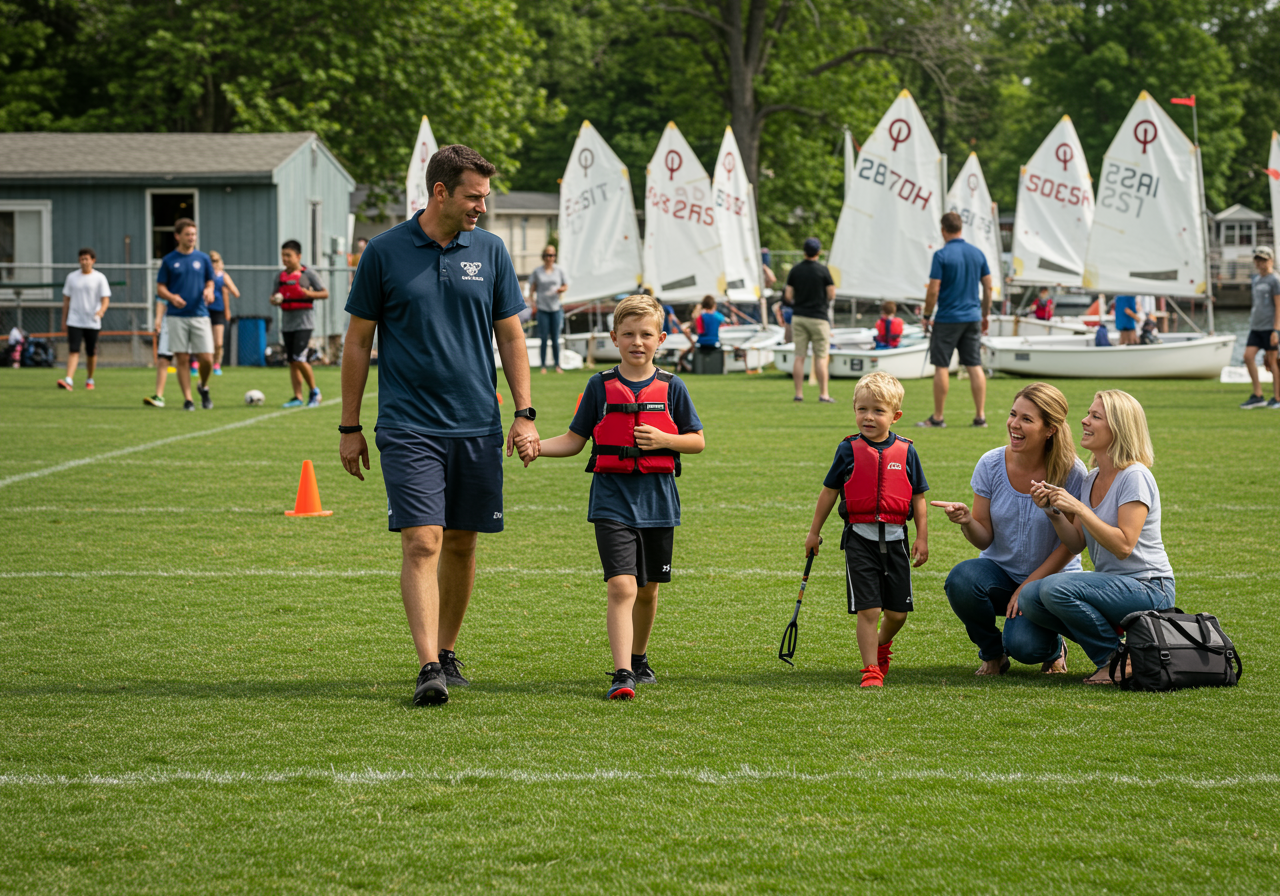
For national governing bodies, this is already familiar territory. Organizations like Sail Canada develop certification frameworks that clubs across the country use to train and evaluate sailors. The programs exist at the national level, but they are delivered at the local level through licensed training centers. The national body maintains the standards. The local centers do the coaching.
But program licensing is not only for large national organizations. Any sports club or training center that has developed a strong, structured program has the potential to license it. A judo club that has refined its youth development curriculum over ten years. A martial arts academy with a proven belt progression system. A swim school with a skill pathway that produces measurably better results. These are all programs worth licensing.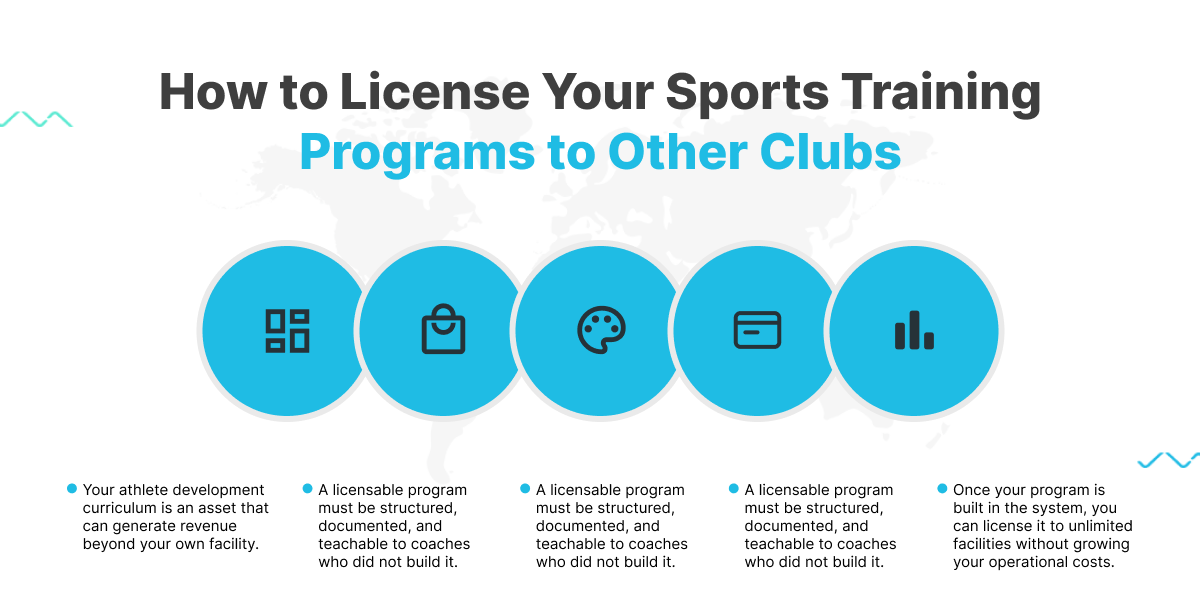 Why Licensing Creates a Meaningful Revenue Stream
One of the most compelling aspects of program licensing is that it generates revenue from work you have already done.
Building a strong athlete development program takes time, expertise, and resources. Once that program exists, delivering it at your own facility is one use of it. Licensing it to twenty other facilities is a multiplied use of the same work, without a proportional increase in your operational costs.
The licensing fee structure is flexible. You can charge per training center, per coach, per participant, or some combination of these. You set the terms and the pricing based on the value of what you are offering and the market you are serving. Checklick’s Evaluation Marketplace lets you set and manage licensing fees and terms directly, so the commercial side of the arrangement is handled in the same platform as the program delivery itself.
For organizations that depend on funding, licensing also creates a stronger case for investment. When your programs are being delivered across multiple centers and you can show data on how athletes are progressing through your curriculum at scale, that is a compelling demonstration of impact.
What Makes a Program Worth Licensing
Not every program is ready to be licensed the moment you decide to try it. There are a few qualities that make a program genuinely valuable to other training centers.
It has to be structured and documented. A program that exists in the heads of your coaches is not licensable. A program that is built out as a clear skill matrix, with defined criteria for each level and a consistent evaluation method, can be deployed to other coaches at other facilities and still deliver the same results. That documentation is what you are actually licensing.
It has to be teachable to coaches who were not part of building it. The strength of a licensed program is that it can be run by someone who was trained on your system, not just by the people who created it. If your program only works when your best instructors are running it, it is not ready to license yet. If any qualified coach can pick it up and deliver it consistently, it is.
It has to be backed by a credible body of experience. Training centers license programs because they want to improve their own offerings. They are more willing to pay for a program with a track record, one that has been run across multiple seasons with measurable results, than for something new and unproven. Your organization’s experience and reputation are part of what you are selling.
And it has to be manageable at scale. If delivering your program to twenty training centers requires twenty times the administrative work, licensing quickly becomes a burden rather than a benefit. This is where having the right infrastructure matters enormously.
Why Infrastructure Is the Difference Between Licensing Working and Not Working
Many organizations that try to license their programs manually run into the same wall. They send out spreadsheets or PDF skill checklists to partner training centers. Centers use them inconsistently. Evaluation data comes back in different formats, at different times, with different levels of completeness. The organization ends up spending more time managing the chaos than it does improving the programs.
The solution is a centralized system that handles the logistics automatically. When programs are licensed through a platform like Checklick, the distribution, the evaluation data collection, and the reporting all happen in one place.
Here is how it works in practice. Your organization builds its skill matrices inside Checklick. You license those programs to your partner training centers through the platform. Each center’s coaches access the program directly and evaluate their athletes using Checklick on their phones or tablets. That evaluation data flows back to your organization instantly. You can see how athletes are progressing across every licensed center in real time, without anyone submitting spreadsheets or compiling reports manually.
Checklick is the only system to easily manage the licensing of programs to training centers. That is a meaningful distinction. Generic sports management tools can handle registration or payments, but they are not built for the specific workflow of licensing a curriculum to multiple external organizations and tracking athlete development across all of them simultaneously.
For larger organizations, Checklick also supports sub-licensing. That means you can allow regional partners to manage the re-licensing of your programs to clubs in their area, expanding your reach further without requiring your organization to manage every relationship directly. Your program can reach athletes in dozens of locations while your team stays focused on the quality of the curriculum itself.
What Training Centers Get Out of It
It is worth understanding the licensing relationship from the training center’s side, because understanding their motivation is what makes the arrangement work.
Training centers license programs because they want to offer their athletes something proven, structured, and credible. Building a quality athlete development curriculum from scratch is hard. Most training centers do not have the resources or the expertise to do it well. Licensing a program from an established organization gives them a head start. Their coaches have a clear framework to work within. Their athletes progress through a structured pathway. Their parents see a professional, consistent experience.
For training centers affiliated with a governing body or national organization, using a licensed program also supports compliance. If the certification framework requires evaluation against specific criteria, using the official program through a recognized platform like Checklick ensures that the standards are being applied correctly.
Training centers also benefit from the ongoing updates that come with licensing. When your organization improves the program, those updates flow to all licensed centers through the platform. Centers do not have to manually download new versions or retrain their coaches from scratch. The improvements are just there, available the next time coaches open the system.
Getting Started With Program Licensing
If your organization is ready to explore program licensing, the starting point is getting your program into a structured, digital format.
That means building your skill matrices in Checklick, defining your evaluation criteria, and making sure your program is documented clearly enough that a coach who was not part of creating it can run it consistently. If your program is still partially informal or relies heavily on undocumented knowledge held by specific coaches, that is the first thing to work on.
Once your program is built in the system, you can start offering it to training centers. Checklick lets you license your programs to an unlimited number of facilities, set the fees and terms for each licensing agreement, monitor usage across all licensed centers, and update your skill checklists instantly when your program evolves. All of that is managed through a single platform, so the administrative overhead of running a licensing network does not grow in proportion to the number of centers you work with.
For organizations that are already working with Checklick for their own athlete tracking and program delivery, adding a licensing layer is a natural extension of what they are already doing. For organizations that are new to Checklick, the evaluations platform starts at fifteen dollars per month for clubs with under fifty evaluators, with a thirty-day free trial to get started.
Your Program Is Worth More Than You Are Using It For
The curriculum your organization has built represents years of work. Running it at your own facility is valuable. Sharing it with the broader sports community through licensing is more valuable still, both for the athletes who benefit from a higher quality of program delivery across more training centers and for your organization’s ability to grow its reach and its revenue without growing its operational costs proportionally.
Checklick makes the licensing process manageable. From building the program to distributing it to collecting data across every licensed center, the infrastructure is there.
Learn more about Checklick’s Evaluation Marketplace and program licensing features at checklick.com, or request a consultation to see how licensing could work for your organization’s specific programs.
