The Growing Complexity of National and Regional Sports Programs
National and Regional Sports Organizations manage athlete development across many clubs, regions, and programs. As participation grows, so does the complexity of managing evaluations, records, and reporting. What once worked through manual coordination no longer scales. Spreadsheets, shared documents, and email submissions create delays and inconsistencies. In 2026, NSOs and RSOs face increasing pressure to maintain clear standards while supporting expanding networks.Why Decentralized Evaluation Systems Break Down
When each club manages evaluations independently, data becomes fragmented. Evaluation criteria vary, formats differ, and reporting timelines are inconsistent. For NSOs and RSOs, this fragmentation limits visibility. Comparing athlete development across regions becomes difficult. Identifying trends requires manual consolidation. Oversight depends on interpretation rather than structured data. Decentralized systems create gaps that grow wider as programs expand.Centralization Is About Structure, Not Control
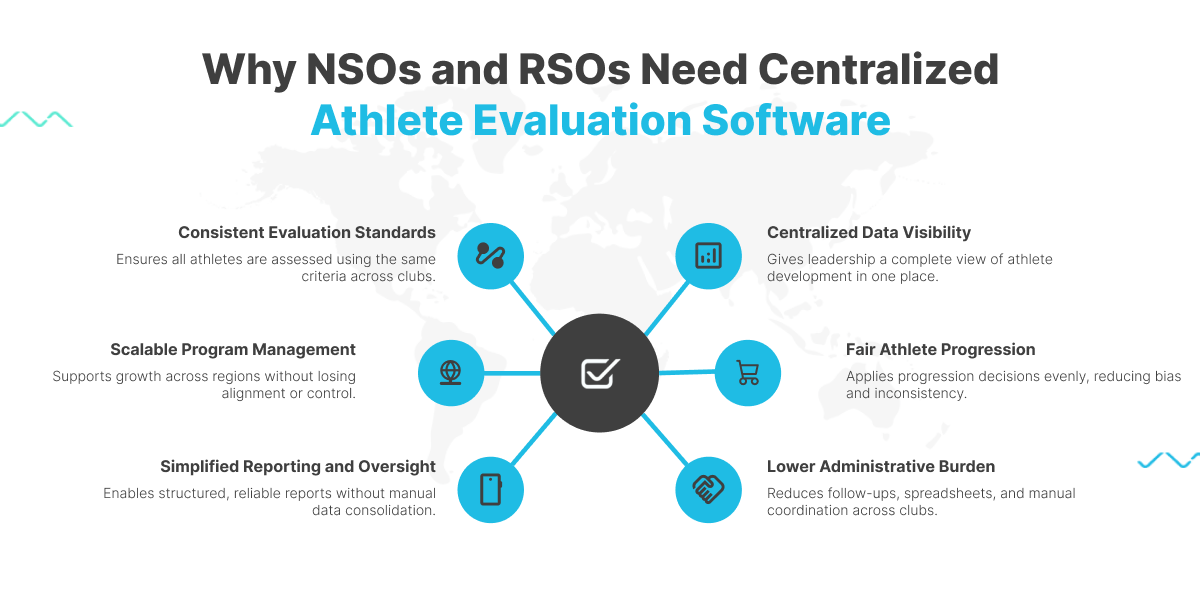
Centralized athlete evaluation software does not remove autonomy from clubs. Instead, it provides a shared structure that supports alignment. Organizations define evaluation frameworks centrally while clubs apply them locally. This balance allows consistency without disrupting day-to-day coaching workflows. Centralization ensures that evaluations follow the same standards, regardless of location.Consistent Standards Across Clubs and Regions
One of the primary benefits of centralized evaluation software is consistency. When NSOs and RSOs use shared digital evaluation frameworks, athletes are assessed using the same criteria nationwide or regionally. This consistency improves fairness and ensures that development pathways are applied equally. Standardization strengthens trust in evaluation outcomes.