Why Tracking Progress Is Central in Youth Sports
Youth sports clubs are built around development. Unlike adult or recreational programs, youth clubs focus on helping athletes grow over time rather than measuring short-term results. Progress tracking allows clubs to understand how athletes develop skills, improve technique, and move through age or ability levels. Without a structured way to track this progress, development becomes difficult to explain and even harder to measure. In 2026, youth sports clubs increasingly rely on software to support this long-term view of athlete development.The Challenge of Tracking Progress Without Software
Many youth clubs still track progress informally. Coaches rely on memory, handwritten notes, or isolated spreadsheets. While this may work for a short period, it does not scale well. As athletes move between seasons, age groups, or coaches, past information is often lost. New coaches have limited visibility into previous evaluations, and progress must be re-assessed from scratch. This creates gaps in development tracking and inconsistency in feedback.Why Consistency Matters in Youth Athlete Development
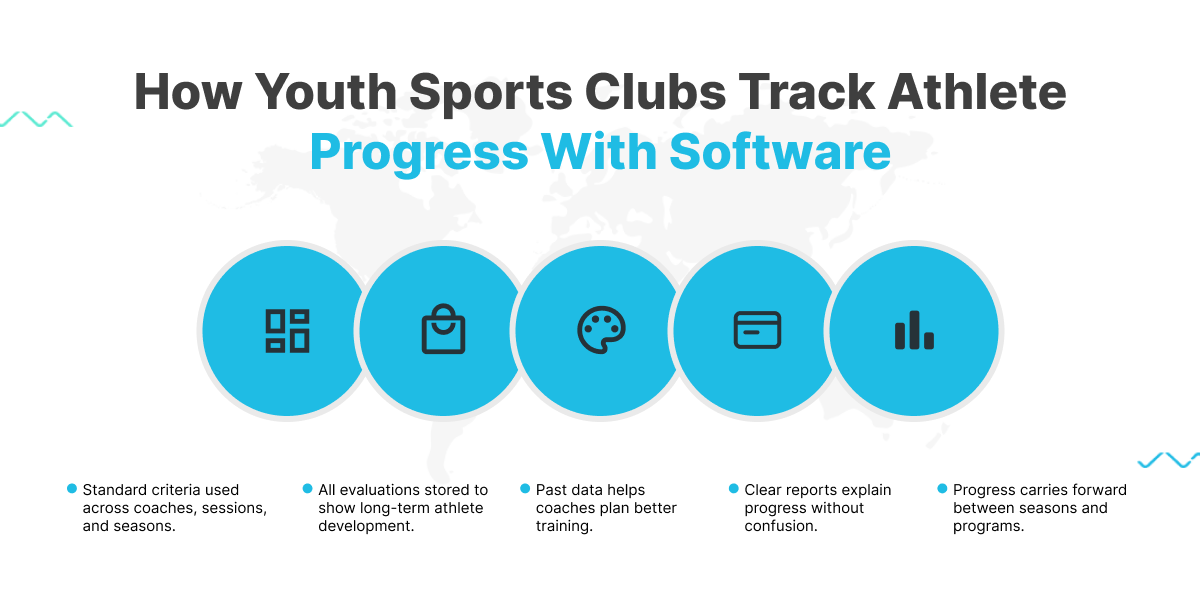
Youth athletes develop at different rates. Some improve quickly, while others progress more gradually. Tracking this fairly requires consistent evaluation criteria over time. Software helps youth clubs apply the same evaluation standards across sessions and seasons. When progress is measured using the same structure, improvements become clearer and easier to communicate. Consistency protects athletes from being judged differently based on who evaluates them.How Software Creates a Progress History
One of the most important benefits of software is the ability to build a history of athlete development. Each evaluation becomes part of an athlete’s record. Over time, clubs can review past assessments, identify trends, and understand how skills have evolved. This long-term record supports development planning rather than one-time judgments. Without software, this historical view is difficult to maintain.Supporting Coaches With Better Context
Youth coaches work with athletes at different stages of development. Software gives them context before training or evaluations by showing past results and progress. This allows coaches to adjust training based on real information instead of assumptions. It also reduces repeated assessments and helps maintain continuity as athletes move between programs or age groups.Improving Communication With Parents
Parents are closely involved in youth sports. They want to understand how their child is progressing and how evaluations are conducted. Software helps clubs share clear, structured progress information. Instead of relying on verbal updates, clubs can communicate using consistent evaluation records. This clarity improves trust and reduces confusion or repeated questions.